
 Translate
Back
Forklift Hand Signals to Improve Workplace Safety
It has been observed that one out of ten forklift operators get injured during their working hours. This is a major safety concern, especially in industries where the working conditions are already hazardous. This is why it is important to know the basics of safety while operating forklifts. Workplace safety is a huge concern and businesses across all verticals spend millions to provide safe working conditions to their workforce.
The same is the case with forklift operators. As these machines work in tough conditions, it is important to understand certain operating procedures that will make their operation even safer. While forklift manufacturers already lace them with a lot of safety precautions and their operations are pretty safe, there are certain hand signals that can come in handy in making the safety even more robust.
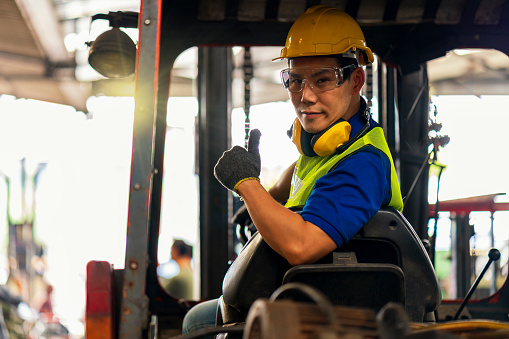
Using Forklift Hand Signals to Enhance Forklift Safety
Certain standardized forklift hand signals have been developed to ensure the safe operation of forklifts. Basic forklift hand signals should be used by a designated spotter to ensure safe navigation. The spotter should focus on the load and not the operator, and the operator, in turn, should look at the spotter to ensure safety. In an ideal situation, only one spotter should be designated to one forklift operator so that there is no confusion. But if someone gives an emergency stop signal, it should be duly followed and acted upon by the operator to ensure no untoward accident happens.
Most forklift operators work in conditions that are unsafe, noisy, and cramped. In such conditions, it is difficult to hear any verbal communication. This is why a set of signals have been developed.
Here’s What to Follow –
Educate Everyone
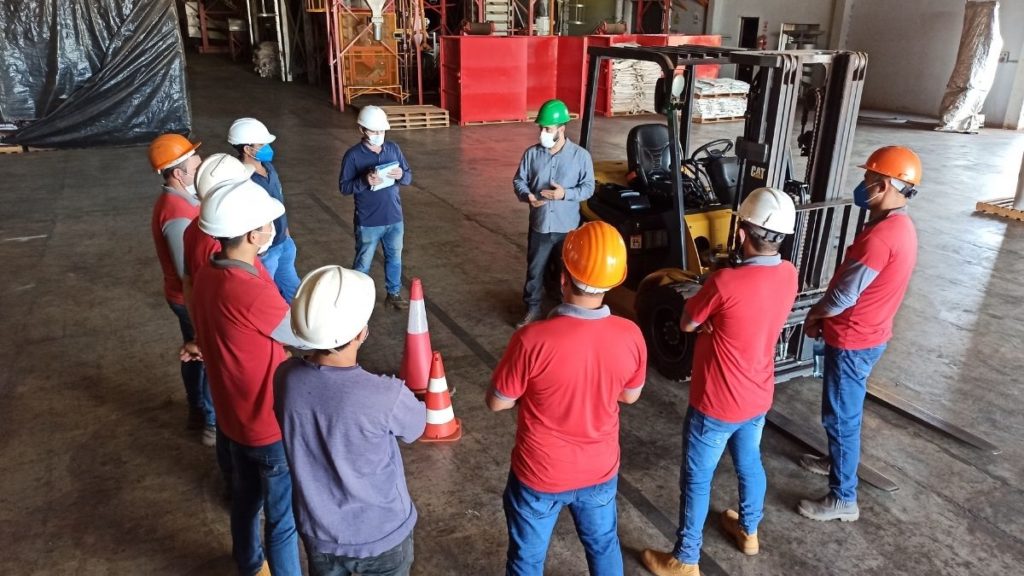
These standard hand signals are universal and every operator working with a forklift uses them. The trick to making the work surroundings safer is to educate everyone in the team and ensure consistency. This will ensure that each and every member working on the premises are aware of the emergency signals and can ensure safety.
Raise the Tines
This particular hand signal is directly connected to the tines or forks. If you want the forklift operator to lift the fork, raise your forearm vertically keeping it perpendicular to the ground. Point your forefinger upwards and move it in small circles. Continue doing the same until the fork is high enough.
Lower the Tines
Move your right arm parallel to the ground keeping your palm downward. Then, lower your arm until the forks in low as desired.
Moving the Tines
To move the tines or forks in the desired direction, extend your left or right arm from the side while keeping it parallel to the ground. Point your forefinger to the direction you want the tines to move while keeping your palm downward.
Tilt Mast Forward
This can be done by extending your right arm parallel to the ground. Use your thumb for further instructions. Lower your arm towards your side while keeping your thumb pointing downwards. Follow the same process until the fork reaches the desired angle.
Tilt Mast Back
Keep your right arm vertical to the ground and your thumb extended, jerk your thumb over the right shoulder. Repeat this movement slowly so that the operator can carefully follow your lead.
Immediate Pause
Bringing everything to an immediate pause is also called Dog Everything. This is an emergency hand signal which is done by clasping the hands in front of your body. This is used in a situation where there is a possible safety concern and someone can be hurt if the forklift continues to operate. For example, if someone accounted for enters the work area and is about to come in the way, you can use this signal to bring everything to a halt.
Emergency Stop
This is the second emergency signal, but it is different from Dog Everything. While the previous one is a signal to pause the working, the emergency stop is to bring everything to a complete halt.
To show this signal, extend both your arms forward while keeping them parallel to the ground. This signal should be taught to everyone in the work area so that anyone can signal the forklift operators in case of an emergency.
Frequently Asked Questions about Forklift Safety Hand Signals
1.Why is it important to teach proper hand signals for forklift safety?
Forklifts are used in work environments that pose a lot of dangers. To ensure that these machines operate safely, it is important to teach everyone the basic hand signals complete with forefinger pointing. This is especially true for emergency stop signals in a bid to ensure that forklift accidents can be avoided.
2.What are some of the important safety hand movements for forklifts?
There are a few safety hand signals that have been designed to ensure safety. They include – raising of tines, lowering of tines, moving of tines, tilting mast forward, tilting mask backward, Dog Everything, and Emergency Stop.
3.What are some basic forklift hand signals every forklift operator must know?
There are 11 major forklift hand signals every operator must know for workplace safety:
- Dog everything
- Raise the tines
- Lower the tines
- Move the tines
- Emergency stop
- Tilt mast back
- Tilt mast forward
- Raise/lower slowly
- Move forward/back
- This far to go
- Honk the horn
4.Why is it important to follow forklift hand signals in the operative field?
Following forklift hand signals in the operative field is important for everyone’s safety and convenience. Hand signals allow all operators to communicate with each other quickly and effectively. Additionally, hand signals also streamline the workflow, enhancing productivity.
5.What does the forklift hand signal ‘dog everything’ mean?
The forklift hand signal dog everything signals the operator to pause the operations due to an unexpected safety hazard. To signal this, the spotter clasps both hands together in front of the abdomen.
6.Do operators and spotters need extensive training to learn all the forklift hand signals?
It is recommended to comprehensively train the forklift operator and spotter to reinforce all hand signals properly. The training should include both practical and theoretical aspects of forklift hand signals. Also, remember to provide them with refresher training at regular intervals.
7. How is the forklift hand signal ’emergency stop’ performed?
For the emergency stop hand signal, the spotter extends both arms straight out on the sides parallel to the ground. This indicates to the operator that all the operations should be immediately stopped.
8.What should a spotter or operator do if they fail to understand a forklift hand signal?
If a spotter or forklift operator fails to identify or understand a forklift hand signal, they should immediately stop what they are doing and ask a superior for assistance. They can also voice their concern loudly to ensure the other operators and workers can hear them.
9.What does the forklift hand signal ‘honk the horn’ mean?
The forklift hand signal ‘honk the horn’ notifies the operator to sound the horn to avoid collisions. Sometimes, workers around the forklift in the operative field fail to see the approaching forklift and must be alarmed by the honk.
10. What does the forklift hand signal ‘move the tines’ mean?
The forklift hand signal ‘move the tines’ notifies the operator to adjust the tines to the left or right to distribute the weight load better. If the spotter wants the operator to move the tines to the right, they will raise the right arm straight out on the side, parallel to the ground. For moving the tines to the left, the spotter will raise the left arm straight out.
